Product Description
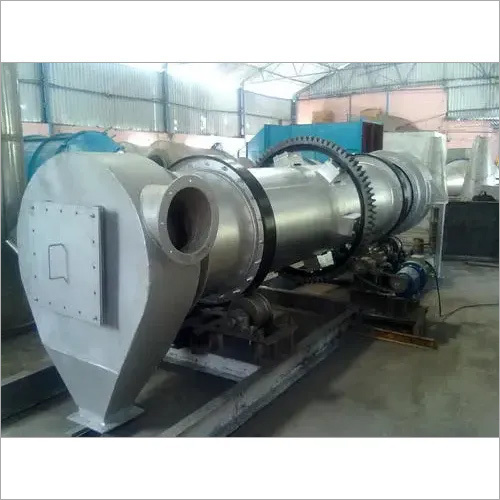
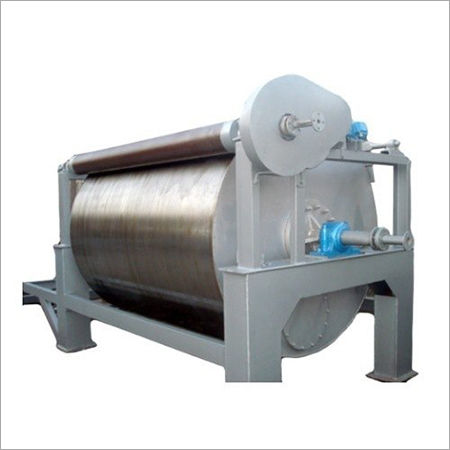
Our Rotary Drum Dryers is a type of industrial dryer employed to reduce or minimize the liquid moisture content of the material it is handling by bringing it into direct contact with a heated gas. The Industrial Rotary Dryers is made up of a large, rotating cylindrical tube, usually supported by concrete columns or steel beams. The Rotary Drum Drying Plants slopes slightly so that the discharge end is lower than the material feed end in order to convey the material through the dryer under gravity.
Industrial Rotary Dryers Unique Features:
- Efficient drying of materials with high moisture contents.
- Handles a wide size range of materials with extended residence times.
- Design permits highest possible drying temperatures.
- Drying, cooling or calcination.
- High thermal efficiency.
Industrial Rotary Dryers Application:
Co-Current Applications :
Wet feed in contact with the hottest drying gases supplied from an external source, where heat transfer is by convection.
- Suifilter cakes
- Minerals, fertilisers,
- Beet pulp
- Floatation concentrates
- Coal/coke
- Clays, phosphates
- Animal feeds
- Germ, stillage
- Sludges.
Specification Of Rotary Drum Drying Plant:
| Speed(r/min) | 3-8 |
| Slope(%) | 3-5 |
| Design | Standard |
| Automatic Grade | Automatic, Semi-Automatic |
Versatile Drying SolutionsRotary Drum Dryers can process a diverse range of materials, including sludge, minerals, biomass, fertilizer, sand, and food. Their adaptable design allows customization of drum dimensions and operating parameters to suit specific industry requirements.
Efficient Heat and Energy ManagementWith inlet air temperatures from 100C to 600C and adjustable rotary speeds, these dryers achieve optimal moisture evaporation while maintaining energy efficiency. Both direct and indirect heating methods are available, powered by electricity, gas, diesel, or coal.
Robust Construction and Advanced ControlManufactured from high-grade mild steel or stainless steel, each dryer is coated for corrosion resistance and durability. Control systems range from fully automated PLC to manual, ensuring reliable performance and easy maintenance.
FAQs of Rotary Drum Dryers:
Q: How does a rotary drum dryer operate to dry industrial materials?
A: Rotary drum dryers use rotational motion and heated air (direct or indirect) to evaporate moisture from materials. The drum rotates at speeds of 310 RPM, moving material through heated zones where moisture is efficiently removed.
Q: What types of materials can be processed in these dryers?
A: These dryers are suitable for sludge, minerals, biomass, fertilizer, sand, and food products. Their versatile design and customizable features make them ideal for diverse industrial applications.
Q: When should I choose a direct versus an indirect heat source?
A: Direct heating is preferred for materials that can contact combustion gases, such as sand or minerals. Indirect heating is recommended for sensitive materials like food, where no direct gas exposure is desired.
Q: Where can these rotary drum dryers be installed and what support is available?
A: Rotary drum dryers can be installed at industrial facilities throughout India. Manufacturers and suppliers offer on-site installation support to ensure proper setup and operation.
Q: What is the typical process for setting up and using a rotary drum dryer?
A: After installation, materials are loaded into the drum where they move and tumble under controlled heat and airflow. Operators can manage drying parameters through PLC or manual controls for precise moisture removal.
Q: How do rotary drum dryers improve industrial drying efficiency and benefits?
A: These dryers offer high capacity, energy-efficient operation, and consistent moisture removal, resulting in improved process quality, reduced energy costs, and reliable performance across multiple applications.








 English
 Spanish
 French
 German
 Italian
 Chinese (Simplified)
 Japanese
 Korean
 Arabic
 Portuguese

 Send Inquiry
 Send Inquiry
 Send SMS


