Product Description
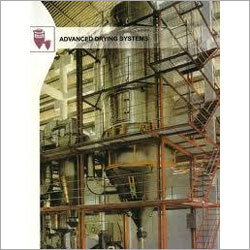
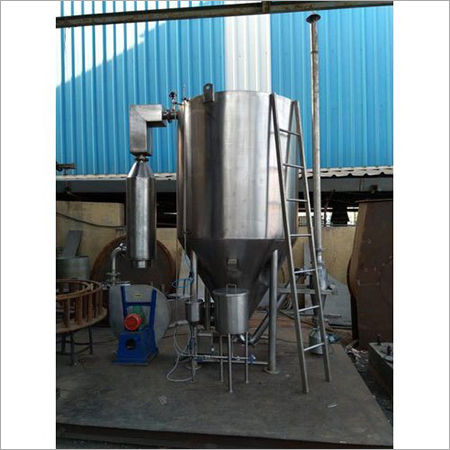
In order to meet the variegated requirements of our clients, we are specialized in serving our valued clients with a wide range of Centrifugal Spray Dryer. These dryers are used in drying liquid using hot gas.
Our Centrifugal Spray Dryers are very popular for their excellent drying capacity hence are used in various pharmaceutical and food industries. In addition to this, these Spray Dryers are also used for drying various types of Catalysts.
Spray dryer is utilized in changing the form of any mixture, from a liquid state into a solid form. The conversion in state of the medley involves removal of moisture present in it. Moreover, this is attained by spraying the blend through a nozzle, aka emulsion, into a packed chamber with hot air blowing into. Via this passage, each drop of the blend looses its water content and convert from fluid to powder.
Spray dryer is benefited by major streams of markets, for example, in food industries to grand medical firms. This process carved revolutions in the area of its utilisation. As we know, there are many regions on the globe where refrigeration is not a part of natives lifestyle, so many cant hoard large quantity of products that require cool storage. Therefore, these regions utilize spray dried products, comparatively.
Lets pick a product such as milk and analyze its production and consumption. We know there is a limited supply in many populous cities, so they need external source to reach their demands. Moreover, spray drying reduces the weight of the milk by 80-90 percent which make it efficiently transferable and ensure a cut down on the shipping charges.
Features Of Centrifugal Spray Drying Plant:
- Easy to install
- High in strength
- Durable
- Excellent finish
- Rust-proof in nature
All spray dryers have atomizer, single-fluid pressure swirl nozzles or spray nozzle which is used for dispersing liquid into a controlled drop sized spray.
There are also two-fluid or ultrasonic nozzles which are used for some other applications. As the requirement of process appropriate drop size can be achieved varying from 10 to 500 micrometers.
Most commonly 100 to 200 micrometer diameter range drops are used. And, often dry powder is free-flowing.
The hot drying gas is passed through co-current or counter-current flow towards the atomizer direction. In addition to this, the counter-current flow method helps in increasing the residence time which is paired with fluidized bed system.
Specification Of Centrifugal Spray Dryer:
|
Design
|
Standard
|
|
Capacity
|
Customized
|
|
Max Temperature
|
1000 degree Celsius
|
|
Automatic Grade
|
Automatic
|
Advanced PLC Automation for Efficient OperationThis spray dryer is managed through a sophisticated PLC control system, which facilitates consistent process monitoring and automated adjustments for optimal results. Operators can achieve precise control over temperature, spray patterns, and drying parameters, leading to uniform powder quality and reduced operational errors.
Versatile and Hygienic DesignConstructed from high-grade stainless steel with mirror or matte finish options, the spray dryer maintains hygiene and resists corrosion. Its Clean-In-Place (CIP) system enables automated internal cleaning without dismantling, reducing downtime and ensuring compliance with stringent sanitation standards across food, pharmaceutical, and chemical industries.
Customizable Capacity and Energy OptionsWith a wide capacity range and compatibility with electric, steam, oil, or gas heating, the dryer suits small-scale laboratories as well as high-volume manufacturing plants. Modular design with skid-mounted installation offers flexibility and easy integration into various production environments.
FAQs of Nozzle Spray Dryer:
Q: How does the nozzle spray dryer convert liquids or slurries into powder?
A: The spray dryer atomizes pumpable liquids or slurries using a high-pressure nozzle, forming fine droplets. These droplets are exposed to hot air (up to 300C) in a concurrent or counter current flow, quickly evaporating the moisture and leaving dry powder, which is then collected by cyclone separators or bag filters.
Q: What are the main benefits of using a PLC-controlled spray dryer?
A: PLC control offers precise management of process parameters such as temperature, airflow, and nozzle operation. This ensures consistent powder quality, repeatable results, improved process efficiency, and reduces the likelihood of manual errors during operation.
Q: When is it advisable to use a skid-mounted spray dryer system?
A: A skid-mounted system is ideal when rapid installation, mobility, or modular expansion is required. It simplifies integration into existing production lines and makes reconfiguration or relocation within the facility more convenient.
Q: Where can this spray dryer be effectively utilized?
A: The nozzle spray dryer is suitable for industries requiring rapid and hygienic drying, such as food processing, pharmaceuticals, dairy, chemicals, and ceramics. Its sanitary design and flexible configuration make it adaptable to diverse industrial environments.
Q: What is the process for cleaning the spray dryer?
A: The system features a Clean-In-Place (CIP) method, enabling thorough internal cleaning by circulating cleaning solutions through the equipment without manual disassembly. This maintains product purity and shortens turnaround times between production runs.
Q: How do you select the appropriate air flow type for your application?
A: The choice between concurrent or counter current air flow depends on the specific product and drying requirements. Concurrent flow offers rapid drying and is suitable for heat-sensitive materials, while counter current flow can provide more complete drying for robust products.








 English
 Spanish
 French
 German
 Italian
 Chinese (Simplified)
 Japanese
 Korean
 Arabic
 Portuguese



 Send Inquiry
 Send Inquiry
 Send SMS
 Call Me Free


