Product Description
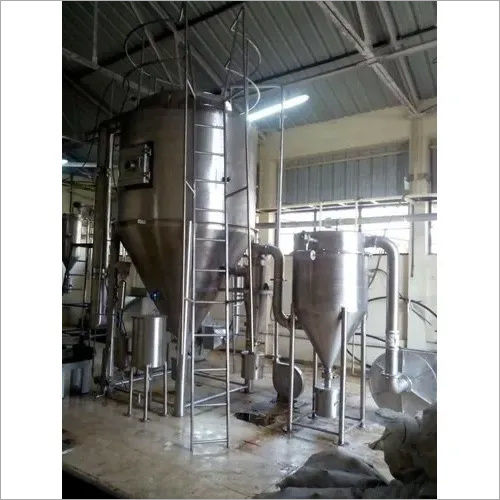
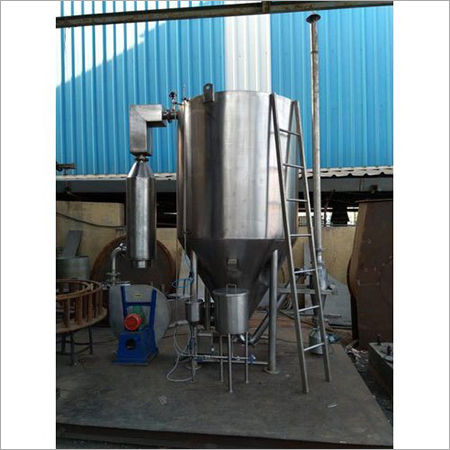
We are dealing with a wide range of Pilot Spray Dryers which are made in complete line with international quality parameters. Used in scale dehydration plant, our Pilot Dryers are equipped with high quality heavy duty components. We are offering these dryers for both long and short term lease. These Pilot Spray Drying Machines are also used for changing the drying applications without effecting the substantial capital.
Features of Pilot Dryers:
- High tensile strength
- Strong construction
- Easy to operate
- Smooth in functioning
Specification Of Pilot Spray Drying Machine:
- Material : Stainless Steel
- Max Temperature : 200 Degree C
- Frequency : 50 Hz
- Min Capacity : 3 kg/hr
- Max Capacity : 60 kg/hr
- Power Source : Electric
- Voltage : 220 V
Advanced Atomization for Superior DryingWith both pressure and two-fluid nozzle options, these pilot spray dryers ensure precise atomization of feed material. This enhances product consistency and drying efficiency, crucial for pharmaceutical, food, and chemical industries. The dryers operate seamlessly in laboratory or industrial settings, supporting development and scale-up.
User-Friendly Controls for Reliable OperationThe integrated digital or PLC control panels deliver intuitive operation, offering smooth control over critical parameters. Overload protection and emergency stop features safeguard the system, ensuring high safety standards in every environment. These dryers also feature batch or semi-continuous operation modes for operational flexibility.
Efficient Cleaning and Sample CollectionCleaning is simplified with a CIP (Clean-In-Place) system, reducing downtime and labor requirements. Removable bins make sample collection straightforward, promoting efficient workflow for research and quality assurance. The mirror or matt finish assures easy maintenance and long-term usability.
FAQs of Pilot Spray Dryers:
Q: How does the pilot spray dryer handle different feed types and volumes?
A: The pilot spray dryer accommodates a feed rate of 2-10 kg/hr, delivered through either a peristaltic or pump-driven system. Its adaptable design supports a wide range of liquid solutions and suspensions commonly used in pharmaceuticals, food, chemicals, and research, ensuring consistent processing regardless of feed properties.
Q: What safety features are included in the spray dryers operation?
A: These dryers are equipped with advanced safety features such as overload protection and an emergency stop. The PLC or digital control panel allows for real-time monitoring of system status, minimizing risks during operation in both laboratory and industrial environments.
Q: When and where can the pilot spray dryer be installed?
A: Designed with a skid-mounted structure, these spray dryers can be installed in laboratory, pilot plant, or industrial settings. Installation is quick and adaptable, suitable for facilities that require equipment mobility and flexibility without extensive infrastructure changes.
Q: What is the process of cleaning the dryer, and how is water consumption managed?
A: The integrated CIP (Clean-In-Place) system streamlines the cleaning process, minimizing manual intervention and ensuring thorough sanitation. Water consumption is kept minimal, supporting sustainability and cost-efficiency, which is especially important in research and production environments.
Q: Which applications benefit from the use of this spray dryer technology?
A: Pharmaceutical, food, chemical, and research laboratories benefit from this spray dryer due to its efficient atomization, customizable configuration, and ability to handle varied feed and drying requirements at laboratory and pilot scales.
Q: How are dried samples collected and managed in this system?
A: Dried samples are collected via removable bins located at the cyclone separator outlet. This system makes sample handling, batch tracking, and downstream analysis effortless and efficient.
Q: What are the main benefits of using a pilot spray dryer with customizable features?
A: The customizable design enables precise control over drying conditions, effective scale-up from laboratory to industrial runs, and integration of multiple heat sources and controls. This flexibility leads to reliable, high-quality results across different product formulations and research objectives.








 English
 Spanish
 French
 German
 Italian
 Chinese (Simplified)
 Japanese
 Korean
 Arabic
 Portuguese



 Send Inquiry
 Send Inquiry
 Send SMS
 Call Me Free


